


In industrial coating, the Automatic Roll To Roll Laminating Machine is a key technology. It allows mass production of laminates in many different fields. These fields include flexible packaging and printed electronics. The machine connects raw materials to finished products. It does this with very good consistency and high output. Knowing how these systems work helps manufacturers make good choices about their production abilities and quality needs.
Core Operating Principles
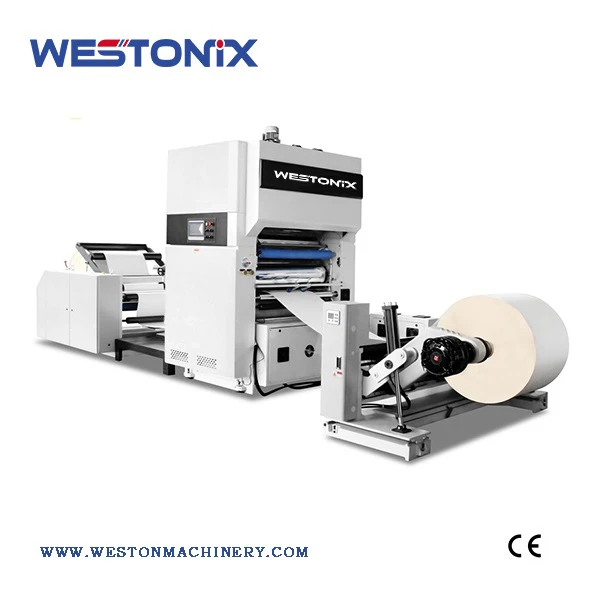
The basic work of an automatic roller molding machine is to continuously roll two material rollers-substrate and coating-through a series of preciselycontrolled rollers. The substrate, usually paper, cardboard or flexible film, is unrolled from its cylinder, while the laminated film is released from a separate unwrapping station. The materials converge at the lamination nip, where heat, pressure and adhesion work together to form permanent bonds between layers.
Research published in IEEE and engineering journals shows that rolling techniques have been used in industry for more than a century, from simple paper processing to complex multi-layer composite production systems. The technology gained significant momentum in the mid-20th century as the packaging and printing industries grew in demand for sustainable, high-speed surface treatment solutions.
The unwinding section machine consists of a tension control systems, which maintains a consistent feed rate throughout the process. Splicing tables allows operators to join new material rolls without interrupting production, which is particularly valuable in high-volume operations where downtime translates directly into lost revenue. Modern systems employ automatic splicing mechanisms to detect rolls near the end of the year and perform connections with minimal tension fluctuation.
The Lamination Zone
The core of the Laminating Machine lies the lamination zone, which is a key bonding process. This area usually has two or more heated rollers. These rollers put exact pressure on the material as it moves through the gap between them. The temperature of these rollers controls how runny the glue coating is. It also changes how the surfaces of materials like BOPP or PET films are activated.
Temperature control is essential to obtain optimal bond strength without damaging the thermal substrate. Most systems maintain roller temperatures within the target value + 1 ° C, ensuring reproducible results during long-term production. adhesion dynamics in rolling process shows that the interaction between bonding temperature, compression force and lamination speed is complex and determines final adhesion quality.
Pressure application is achieved by calibrating the fixture settings which compress the material layer as it passes through the laminated area. The pressure must be sufficient to remove air bubbles and ensure adequate surface contact while avoiding squeezingout the edges of adhesive material. Modern machinery adopts hydraulic or pneumatic systems, which can dynamically adjust nip pressure according to the variation of material thickness.
Material Handling and Web Pathways
In auto-reel Laminating Machine, the movement of materials requires careful management of the reel path --the path of the material from reel to fold to reel. Guide rollers maintains proper alignment and tension distribution throughout the system. Dislocation at any point can lead to wrinkles, lengthening of the curling stage or uneven width of the curling bond lines.
Tension control is the foundation of stable web processing. Too little tension can cause the webbing to sag between rollers, creating inconsistent nip conditions and the formation of potential folds. Excessive tension will stretch the substrate, resulting in an unstable size of the finished product, increasing waste rate. Advanced lamination systems adopts closed-loop tension control and adjusts motor speed according to real-time feedback of load cells.
The winding section gathers laminate material onto a new core and maintains controlled tension to produce a reel with the same hardness and coiling density. Too much tension in the coil can lead to overloading of the inner core, which is difficult to deploy in subsequent processing, and too little tension can lead to loose coil that cannot be reliably handled on automated production lines.
Adhesive Systems and Applications
The choice of adhesive system fundamentally determines the performance and limitations of any automatic roller laminator. Dry lamination is coated with solvent or water-based adhesive on the substrate and dried prior to the bonding step to make it suitable for thermosensitive materials. Temperature and airflow management are needed to dry the oven completely to remove solvents and prevent substrate damage.
Solventless lamination is becoming increasingly important as environmental regulations tighten and manufacturers seek to reduce emissions of volatile organic compounds. The process directly applies two-component adhesive to substrates without intermediate drying, greatly reducing energy consumption and production time. Adhesive material exit laminate clamping ready to roll back immediately simplifies the entire process layout.
Thermal melt adhesive system adopts the melt form of thermoplastic adhesives to achieve instantaneous bonding without prolonging drying requirements time. These systems have advantages in speed and simplicity, but adhesives require to be carefully selected to ensure compatibility with substrates and the laminating film. Research in packaging science has explored a variety of adhesive formulations optimized for specific material combinations and end-use requirements.
Speed and Throughput Capabilities
The main advantage of the production speed is automatic roller laminator in relation to the replacement of paper. While a sheet-fed laminators is required to process material individually for each piece of paper, the continuous flow of paper from roll to roll system has been maintained and effectively expanded with the increase in production demands. Modern high-speed laminators can achieve throughput of more than 500 meters per minute on certain material combinations.
The relationship between speed and mass needs to be carefully balanced. Higher velocities reduce the length of time the adhesive is used and the humidity on the substrate surface, which may reduce bond strength if other process parameters remain the same. Rather than simply elevating the device to the highest level, manufacturers must optimize temperature, pressure and adhesive formulations based on the speed at which the device is running.
Cylinder cleaning systems are placed in front of the lamination areas. They help keep quality high by removing dust, dirt, and static electricity. Dust and static can get in the way of bonding. A corona treatment device activates the surfaces of materials like BOPP film. It raises the surface energy. This helps the glue spread and bond better. As production speed goes up, these pre-treatment steps become more and more important.
Quality control and monitoring
Modern automatic roller laminating system includes advanced quality monitoring capabilities to detect and respond to process variations in real time. Optical sensors scan web surfaces for defects including bubbles, layers, wrinkles and inconsistent coating weight. When a defect exceeds a predetermined threshold, the system can notify the operator or automatically flag the defect for later deletion.
Bonding strength tests usually provides critical feedback on lamination quality by peel testing samples collected regularly during production. Some advanced systems use on-line skinning tests to continuously assess bond strength without affecting production, and their markings may indicate an imminent quality problem before a defective product is produced.
Dimension measurement systems verifies that the laminates meet thickness and width specifications throughout the production process. Changes in total thickness can mean there are problems with how the glue is put on. They can also mean the base material is not even. Changes in width can mean you need to fix alignment or tension issues.
Cross-Industry Applications
The automatic roll to roll laminating machine is very versatile. This helps it work in many different industries. In flexible packaging, these machines create layered structures. These structures combine the printability of paper or BOPP film with the barrier properties of aluminum foil or special coatings. Food packaging applications get a lot of benefit from the steady quality and high output that roll processing provides.
Print publishing industry relies heavily on film lamination to protect printed materials and improve their appearance. Magazines, book covers, business cards and promotional materials have all been patched to improve durability and resistance to humidity, fingerprints and UV damage. Enhanced vision through glossy or matte film lamination increases sensory value of printed products.
Electronics manufacturing uses rolling composite technology to produce flexible circuits, displays and photovoltaic components. Continuous processing capability makes the production of these high-value products cost-effective while maintaining the strict tolerances required for electronic functions. Research published through scientific databases continues to explore new applications in areas such as wearable technology and smart packaging.
Maintenance and application of best practices
In order to maintain optimal performance of automatic rolling Laminating Machine, it is necessary to pay regular attention to key components and operating parameters. Roller cleaning can prevent the accumulation of adhesive, because the accumulation of adhesive on the width of the web paper will have inconsistent pressure. Cleaning schedules depends on the quantity of adhesive produced and the type of adhesive used, and it is recommended to check frequently when switching different adhesive formulations.
Network-oriented calibration ensures that material paths remain at the core of all processing stations. Dislocation builds up when the material touches many rollers. This can cause wrinkles or edge damage. Regular calibration checks using test materials help to find and fix alignment drift. This happens before it can hurt production quality.
Operator training has a big effect on lamination quality and how long the machine lasts. Knowing how temperature, pressure, speed, and bonding performance are related helps operators respond well when big problems come up. Writing down the process settings for each production run gives useful reference data. This data helps with fixing problems and making the process better.
Conclusion:
Automatic roller laminators embodies the principle of continuous production and provides high throughput, consistent quality and operational flexibility for surface treatment applications. From its core unwinding and rewinding functions to precise temperature and pressure control of the lamination zone, each system element contributes to the overall ability to produce laminated materials on an industrial scale.
Understanding these operating principles helps manufacturers evaluate equipment options, optimize production processes, and maintain quality standards throughout operations. With the development of material science and control system, roller to roller laminating technology will still be the core of protection and decoration surface treatments.
References:
IEEE Xplore Digital Library. "Rolling Manufacturing: Process Elements and Recent Developments". Continuous Manufacturing Technology Paper.
Modeling the adhesion dynamics roller-roll compounding. Journal of Manufacturing Processes.
ResearchGate. Academic journal on rolling manufacturing techniques and applications.
Roller processing association. lamination criteria and surface treatment technology library resources.
Springer. Application Performance and Life Cycle Evaluation of Soft Packaging Materials. Packaging magazine lamination processes and environmental considerations.
Wiley Online Library. Comprehensive technical reference for process design and industrial application of ``rolling manufacturing ''.


