


Walk through any commercial printing facility and you may find one device running almost continuously: a laminating machine. Whether it's protecting book covers, sorting out packaging boards, enhancing restaurant menus or sealing promotional materials, surface lamination have become a standard step in printing. Among the various lamination technologies available, thermal film lamination is remarkable for its bonding strength and the quality of the finished product, and the equipment that automates this process on a production scale is the automatic thermal film laminating machine.
This article introduces what the device is, how the thermal adhesive works, what purpose it has, and how it compares to other coating methods.
Definition Thermal Film Lamination
Thermal lamination is a surface treatment that uses heat and pressure activation mechanism mechanisms to permanently attach a film to printed or unprinted substrate. The bonding system on the membrane is thermoactive -- meaning it requires a higher temperature to melt, flow and bond to the substrate surface. Once cooled, the adhesive re-solidifies again and builds a strong, durable bond that is difficult to separate without damaging the substrate.
This thermal bonding distinguishes thermal lamination from cold bonding, which uses pressure-sensitive adhesive bonded at ambient temperatures. Hotkeys often produce stronger adhesion and a cleaner finished appearance, making them the preferred method for most commercial printing finishing applications.
Plastic films for thermal lamination are usually made of biaxially oriented polypropylene (BOPP), polyethylene terephthalate (PET) or nylon, depending on the desired surface characteristics and application demands. BOPP films are the most widely used because of their combination of optical clarity, flexibility and cost-effectiveness. Films have glossy, matte and soft surface textures, each imparting the finished product a unique appearance and tactile quality.
What is the function What an automatic thermal film laminating machine?
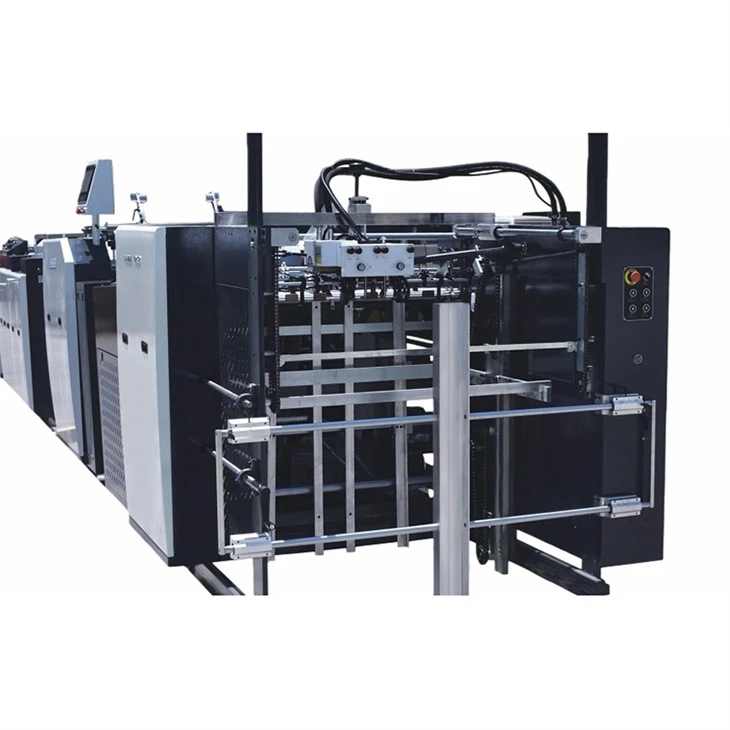
Automated thermal film laminating is an industrial equipment, its purpose is to apply thermal lamination film to printing substrate in continuous automatic production process. An automatic thermal film laminating machine integrates feeding, coating, pressure bonding, cooling, and stacking with minimal operator intervention. The word "automatic" distinguishes these machines from manual or semi-automatic alternatives-automated models that handle substrate feeding, coating, pressure bonding, cooling and output stacking during normal production with minimal intervention from operators.
The machine accepts printed paper- usually books, packaging boards, foldable cardboard boxes, brochures or large-format prints-and presses the hot film against the substrate surface through a heating roller system that controls temperature and pressure. The adhesive material exits the machine, cools briefly, and is then collected or fed into downstream cutting and finishing process.
Automatic operation allows continuous production at a speed inaccessible by manual method. Modern automatic hot film veneers typically operate at a speed of 12-30 meters per minute, depending on substrate thickness, film type and machine specification. Production capacities in a commercial environment can reach hundreds of sheets per hour, depending on sheet dimensions and operational parameters.
The Thermal Bonding Process: Step: step by step
Understanding the order of steps helps show why automated thermal film laminators give consistent results in mass production.
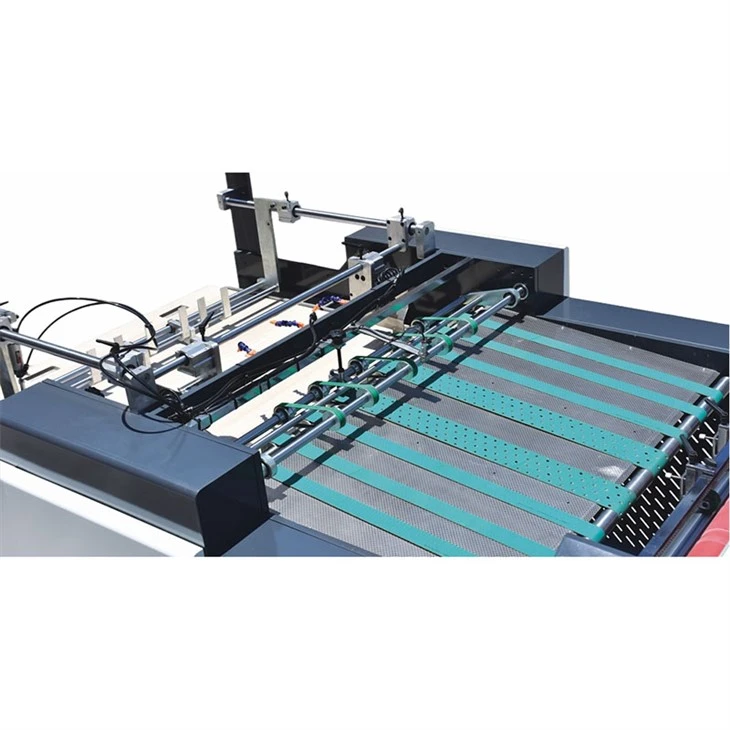
Substrate feed: Printed sheets are put into the feeder section of the machine. The automatic feeder uses suction systems and alignment parts to take one sheet at a time from the stack and send it straight to the laminating station. Alignment of the Sheets is key-misalignment can lead to overlapping edges of the films or failure to cover the entire surface.
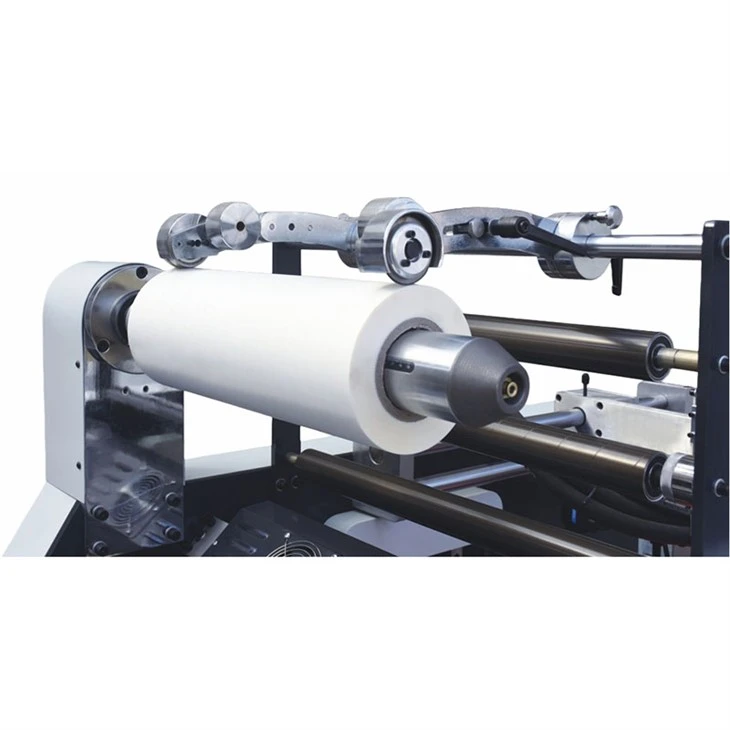
Thin film spreading and tensioning: Install a roll of thermal lamination film on the machine's film station. When the machine is running, film unfolds from the roll and passes through tensioning system, which maintains the consistency of the film tension across the width of the work. Stable tension prevents wrinkling, foaming and uneven coating of the finished product.
Thermal activation: As the film approaches the cladding clamp (where film meets substrate), it passes over or near the heating element-usually a heating roller with precise surface temperatures control. The thermal adhesive coating on the thermo-activated film reaches the working temperature required for bonding. Temperature control is an important parameter, too little heat can lead to poor adhesion, and too much temperature can lead to substrate distortion or membrane damage.
Pressure bonding: Heat films and materials pass through pressure rollers. The rollers hold them together with some force. Glue, pressure and time work together to form a strong bond between the film and the material. The setting and pressure level of the drum vary according to the thickness of the material and the type of film used.
Cooling and separation: After bonding, the layered material moves through the cooling area. The glue hardens again, and this makes the bond reach full strength. If the material does not cool enough, it stays soft and can come apart easily in later steps. Some machines use active cooling parts. Other machines just let the air cool the material over a set distance.
Output and collection: The fully layered sheets are taken out of the machine. They are then gathered in the output area for later steps like cutting, creasing, or other work. further finishing steps.
Comparing Automatic and Semi-Automatic Models
The distinction between automatic and semi-automatic thermal film laminating machines lies mainly the degree of human involvement in feeding and output.
Semi-automatic machines require operators to hand in paper once or in small batches, which limits throughput and results in differences between operators and operators in sheet placement. These machines are suitable for facilities with short-term operations, special job or production volumes that are insufficient to justify investment in fully automated equipment.
Fully automated machinery, including the configuration of an automatic thermal film laminating machine, uses an electric feeder with sensor control plates for separation and transport. Operators load the feeder stack, monitor production, and remove occasional blockages or faulty feeders, but do not manually process each worksheet. This automation has resulted in consistent production speeds, more consistent results and a significant increase in output per hour of work.
Studies examining the efficiency of lamination process efficiency, including those published in packaging and printing technology literature, have consistently identified automation as a key driver of quality consistency and cost reduction in high-volume lamination operations.
Scope of application
Automated thermal film veneers produce products that cover most aspects of commercial printing and packaging production.
Packaging and folding cartons: Consumer product packaging is often subjected to thermal lamination to protect printing quality, moisture-proof, and enhance shelf attractiveness. The laminated surface also improves the rigidity of the structure and the wear resistance during distribution process.
Book cover and teaching materials: Textbook and book cover lamination can greatly extend the service life of the product. Research on flexible packaging materials and life cycle considerations has documented how protective membranes extend the life of printed materials, reduce replacement frequency and associated resource consumption.
Promotional and marketing materials: brochures, catalogues, sales materials and presentation folders can be reprocessed to maintain appearance. The choice of gloss or matte finish helps brand positioning and perception of product quality.
Labeling and point of sale display: Retail signs and product labels that need to be easy to see are laminated. This helps them stay readable and look good in tough retail conditions, like changes in temperature, humidity, and physical wear.
Menu boards and hospitality materials: Prints used in restaurants and hotels are covered with thermal lamination. This helps them stand up to frequent cleaning and handling in food service settings.
Key Technical Parameters
When evaluating an automated thermofilm laminator, several technical parameters determine its suitability for specific applications.
Working width: Machines are specified by maximum sheet width they can accommodate. Common workwidths range from 520mm to 1100mm and there are larger formats available for professional applications. Working width must exceed or match the maximum plate used in production.
Substrate weight range: The machine is designed to handle substrates within a specified weight ranges, usually expressed in grams per square meter (gsm). Typical applications of commercial laminating machines range from 105 to 400 gsm and can accommodate standard paper through heavy cardstock. Machines designed for packaging work can handle heavier substrates.
Temperature control: Precise temperature regulation on the surface of the heating roller ensures the activation of the adhesive, regardless of production speed or environmental conditions. A machine of good quality has the characteristic of temperature uniformity specifications, which can minimize variation of working width.
Production speed: The operation speed affects the production capacity and indirectly the bonding quality. The relationship between speed and temperature must be balanced-higher speeds require higher temperatures or modified thermal exposure configurations to achieve equivalent bonding quality.
Type of films compatible with Thermal Lamination
Automated hot film patch machine can be adapted to a variety of film types, each type is suitable for different application requirements.
Gloss BOPP films produces high resolution, reflective surfaces, enhance color vibrancy, and create a high quality appearance. Matte BOPP films produce non-reflective surfaces with complex appearance that are increasingly favored for advanced packaging and publishing applications. Soft touch matte film adds to the quality of tactile velvet and has gained significant popularity in luxury packaging and cosmetics.
Compared to BOPP BOPP PET films have a higher temperature resistance and size stability, making them suitable for subsequent heat treatment processes such as hot stamping or embossing on laminate surfaces.
The Springer publication reviews life cycle assessments of flexible packaging lamination processes and provides useful data on how different membrane-substrate combinations affect material properties, recyclability considerations and environmental performance-factors that are increasingly relevant to packaging purchasers and brand owners who make sustainability commitments.
Maintenance and operational considerations
The stability of film laminating requires systematic maintenance of heating and pressure systems. Roller surfaces must be kept clean from adhesives that may be transferred to finished products. Temperature calibration ensures that the heating roller maintains the required operating temperature accurately throughout production shifts.
Thin film tension systems requires to be adjusted regularly with the change roll diameters during production. Continuous tension prevents wrinkling and blistering due to inadequate film control. The setting of the Pressure roller may need to be adjusted when the thickness of the conversion substrate varies greatly.
Most automated machines include diagnostic systems that monitor critical parameters and alert operators to situations beyond a specific range, supporting active maintenance and minimizing unplanned downtime.
Conclusion:
An automatic thermal film laminating machine is a specially manufactured industrial device that uses a thermosensitive adhesive system to attach plastic film to a printed substrate in a continuous automated process. The bonding mechanism produces powerful, durable bonds suitable for applications requiring cross-packaging, publishing, promotional materials, and professional printing finishing. Automation brings quality in line with production speed, unmatched by manual methods, making these machines central to commercial printing finishing operations. Choosing the right automatic thermal film laminating machine depends on substrate range, film compatibility, and production volume.
As the demand for printing finishing continues to evolve-for high quality tactile finishing, sustainable film options, and high speed production capacity-automated thermal film laminators remain a foundational technology in the printing and packaging industries.
Reference
ScienceDirect Topics-Lamination Process Overview: Adhesive Lamination Processes and Its Functional Application in Flexible Packaging Materials
Springer - International Journal of Life Cycle Assessment Applied Properties and Life Cycle Assessment of Flexible Packaging Lamination Processes
ResearchGate-Handbook of Printing, Packaging and Laminations: Surface Treatment and Adhesion in Thin Film Lamination Applications
Design and Technology A-Level Academic Resources-Paper and cardboard laminating completion process: technology, materials and applications
Journal of Packaging Technology and Research (Springer) -Surface Protection Technologies in Commercial Print Finishing and Packaging Production


