


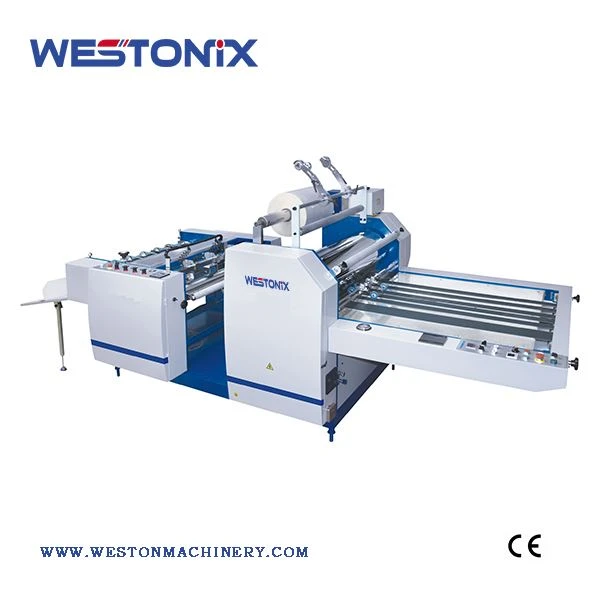
Semi Automatic Thermal Film Laminating Machine process paper and cardboard from lightweight 80 gsm sheets to roughly 450–500 gsm with a total thickness of between 18 and 30 microns coated with pre-glued BOPP or PET thermal film. Its limitations stem from three limiting factors: the heat-activated EVA adhesive, the nip pressure the machine can withstand, and the entry conditions for printed paper.
"Heat" decides what to do before loading anything
Semi Automatic Thermal Film Laminating Machine don't melt loose adhesives like an old-school wet laminator. It runs pre-coated film-base membranes with a heat-activated EVA adhesive layer-and the machine's job is to bind the sheets and membranes together at the right temperature, hold them in place for the right amount of time under the right nip pressure, and cleanly separate the release carrier. This structure fixes the working window: published film datasheets consistently specify bonding temperatures in the 85–110 °C range nip pressures in the low MPa range, and machine operators tune in the window rather than invent one. So, all the material problems boil down to one proper question: Can the paper carry heat without curling and burning, and will the EVA layer get wet with something printed or unprinted? In both cases, paper that fail either test fail on a machine, no matter how thick or thin it was.
Paper and cardboard: core range
Bread and butter substrates are wood-free and coated with art paper from about 80 gsm upwards-book covers, brochures and flyers at the light end-and folding boxboard, ivory board, and coated duplexes through 200 to 400 square meters, most cartons and covers of work life. roughly 450–500 gsm of thick single-layer panels still operate on semi-automatic sheet paper machines, although board stiffness changes settings: Gramm is measured according to ISO 536, and bending stiffness measured according to ISO 2493-1 explains why a stiff 400 gsm sheet require greater temperature margin and gentler stacking than sheets of equal weight.
Coffee weight on the cover, label and label of the stock at the light end benefits from a slower, operatory-controlled feed, semi-automatic layout. Uncoated kraft and recycled panels are also available, with the caveat that absorbent surfaces absorbs the EVA layer faster, so operators can compensate with slightly higher temperatures or slower speeds. Heavy textured or embossed sheets are the actual boundary-if the sheet doesnot press the film into the texture, the bond is due to design rather than error.
| Matrix | Typical weight | Behavior on machines |
|---|---|---|
| Woodfree / art paper | 80–157 gsm | Light ends; watch curls and static electricity |
| Folding boxboard / ivory | 200–400 gsm | Core collection of covers and cartons |
| Coated duplex / heavy board | Up to ~450–500 gsm | Need more heat capacity |
| Kraft / recycled board | 120–350 gsm | To absorb; raise or slow. |
| Texture / Relief Material | any? " | Bonding is limited by texture depth |
On film: What can feed a machine
On the film side, the semi-automated thermofilm laminators can accept any adhesive as a roll of a heat-activated EVA layer, and the datasheet algorithm is simple: 12-18 microns of a BOPP or PET base film with a heat-seal EVA layer of 6–12 microns microns, with a total measurement range of approximately 18-30 microns. The glossy and matte BOPP covers most commercial work; PET films are chosen where hardness, heat tolerance or a firmer feel is wanted; and special surfaces-soft contact, holographic and metallized thermal membranes-can run on the same machine as long as the EVA layer is standard.
For any buyer, one film-side number matters: corona treatment. Film increases surface energy energy the extruder to more than 38 dynes/cm, so the binder anchors; film stays in storage for too long or loses this processing effect significantly, which is why the datasheet contains a shelf life statement and why old rollers can come off even if the machine is perfectly set up.
Printed Sheets: surface under a film
Film is usually bonded by ink and varnish rather than bare paper. Plywood must be dry-laminated on wet ink elevators and decolletage machines-and spray powder is a typical contaminant: dust that is not harmful to embossing acts as a bonding barrier under film, which is why heavy powder operations are scrubbed or run in higher environments. Thick shades and dense dark solids are also different from sparse paper and absorb heat in different ways, requiring a tried-and-true compromise setting.
Digital output accounts for an increasing share of laminating work, but it's worth being honest: toner fuses with paper and adhesions to EVA are different from oxidized offset inks, and the film's machine manuals treats them as a test rather than a guarantee. Stores that add digital covers to their laminate schedules should test the actual print-paper-membrane combination before use. The same precautions apply to inline-coated sheets, whose varnish chemistry varies from supplier to supplier.
What it means to push the envelope
Semi Automatic Thermal Film Laminating Machine operate in a known envelope, and their practical inapplicability is worth explaining. Plates that exceed the machine's rated maximum load fail in feed and nip geometry and then bond. Foam and hot bubble plates with high residual moisture; warped or heavily stacked sheets double up at the feeder, which is the price of the operator's the "semi automatic" layout for loading each stack. Because EVA has different wetting properties on these surfaces, the region of the imprint does not adhere to a large amount of UV varnish, so a combination of films, laminates and full lamination requires sorting decisions rather than a single pass. These are not machine defects-they are material properties that satisfy heat treatment and define the boundaries that buyers should draw before they quote job.
FAQ
How big a surfboard does a typical semi-automatic machine need? Leaflet semi-automatic models typically handle 450-500gsm of single-layer panels; the exact roof is machine spec, not film, and semi-automatic feed leaves each panel at the operator's discretion, with the hard panels arriving before the thick panels.
Can it be laminated digitally? Usually, yes, but toner is thefirst substrate to be tested: adhesion depends on printing press, paper and melting temperature, so the actual combination of test runs is standard practice before production commitments.
Gloss, matt or feel-does the machine care? Since the EVA layer is the same, the machine processes all three in the same way; the surface layer changes appearance and feel, not the bonding window.
And most importantly
In a word, Semi Automatic Thermal Film Laminating Machine laminating paper to paper, film to film. The list of materials for these machines is extensive - panels ranging from 80 gsm to 500 gsm, BOPP and PET thermal membranes between 18 and 30 microns that glow through soft-touch surfaces - but the floodgates are always the same pair of questions: Can the plates hold the heat that binds? Dry, flat, powder-controlled boards worked well above the kramic range; everything else is a trial run first.
Source of information
ISO 536 -Paper and cardboard: Determination of weight range, basis for discussion of weight ranges.
ISO 2493-1 -Bend stiffness of paper and cardboard, changing machine performance under weight of cardboard.
TAPPI T 550 -The measurement behind the Moisture content, humidity and blistering limits of paper and cardboard.
ASTM D903 – Standard method for evaluating the quality of adhesives by their stripping strength.
FSC --Certificate of Chain of Custody in connection with the paperboard substrates feeding lamination operations


